






When it comes to delta-8 and delta-9, it’s always a face-off between which is a better legal high. Delta-9 has been notorious for quite a few decades, buxt has now established a solid foothold in the US. Meanwhile, the other one, delta-8, has been going through the eye of the needle. From Texas to Ohio and likely beyond, delta-8 has been dealing with tougher rules. So, in this article, we dive into the current state of the Delta-8 vs Delta-9 debate—how they differ, where they sit as the laws ship, and for those looking for an accessible high, which gives you a better experience.
What Is the difference between delta-8 and Delta-9 THC?

What is Delta-8 THC (D8)?
Delta-8 THC is a naturally occurring compound found in cannabis, known for its milder psychoactive effects. This less potent THC isomer is commonly found in vapes, edibles, and hemp flowers, often making it more accessible and preferred over delta-9 THC. D-8 THC is created as a byproduct when CBD extracted from hemp undergoes a specific chemical process.
Despite being present in small quantities naturally, delta-8 THC sales have exploded in recent years. Importantly, no delta-8 THC product has been approved by the U.S. Food and Drug Administration. The FDA has also issued warnings and cease-and-desist letters concerning the marketing and safety of delta-8 products.
What is Delta-9 THC (D9)?
Delta-9 THC is the primary psychoactive cannabinoid in cannabis, responsible for most of the intoxicating effects. It primarily acts as a partial agonist at the CB1 receptors within the body's endocannabinoid system, leading to euphoria, altered perception, and impaired coordination, with some activity at CB2 receptors as well. Delta-9 exhibits a stronger affinity for CB1 receptors and greater potency compared to delta-8. While there are no over-the-counter cannabis products containing delta-9 that are FDA-approved, the agency has approved certain cannabinoid drugs separate from plant products.
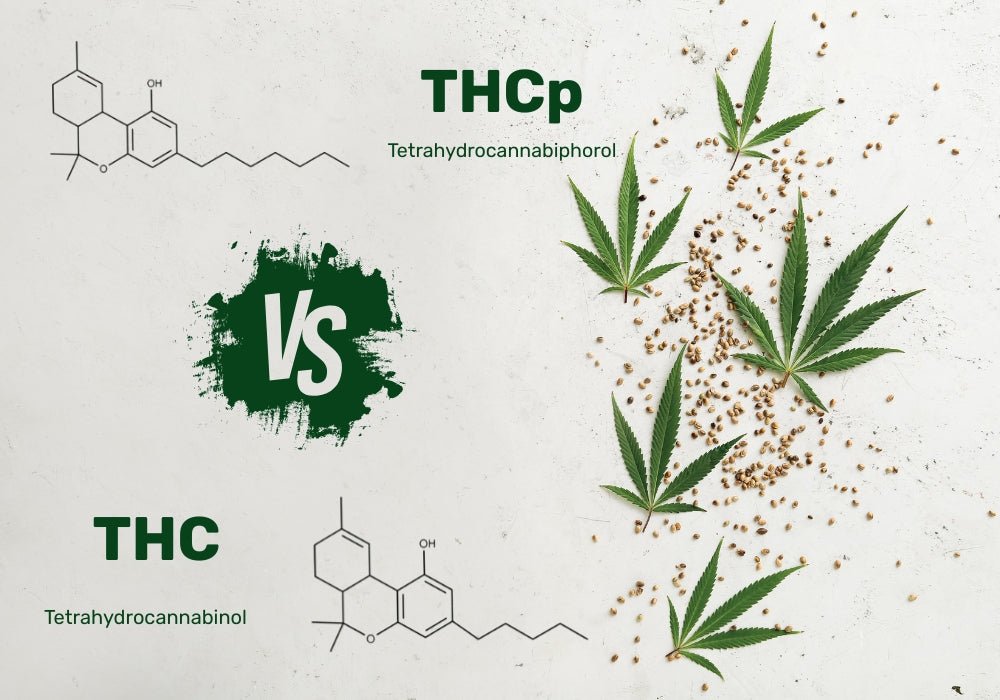
Chemical structure comparison: Delta-8 vs Delta-9
Delta 8 vs delta-9 THC isomers have the same chemical formula: C21H30O2. They share the tricyclic THC backbone and pentyl side chain. The Delta-8 vs. Delta-9 difference centers on the double‑bond location:
- D8 = C8–C9
- D9 = C9–C10
They share the same mechanism of action as the endocannabinoid system. However, the difference alters the whole molecular shape—and more importantly, the way they activate the CB1 cannabinoid receptors. The chemical structure is the main reason delta8 has milder effects than delta9, which can also lead to various health benefits.
Natural occurrence of D8 and D9 in cannabis
The cannabis plant primarily biosynthesizes THCA, which can transform or develop into delta or delta-9. Delta 8 vs delta 9 formation or harvest:
- Abundance: Delta 8 appears in trace amounts, typically below 0.1% while delta 9 naturally occurs at a percent-level abundance. According to a review of cannabis analyses, marijuana plant material can be at roughly 0.5–5% Δ9‑THC, hashish at 2–10%, and hash oil at 10–30%.
- D8 vs D9 conversion: delta-9 is a byproduct of decarboxylation of THCA (with heat and time). Meanwhile, delta-8 is not a primary enzymatic product but a natural metabolite produced during the extraction and isolation procedures.
- Harvest-to-manufacturing: Extraction of special delta-8 in the cannabis plant is not economically viable for brands, so their solution is to synthetically produce it from hemp-derived CBD. Meanwhile, you can expect D9 in modern retail flower to land within roughly 13–35%.
How Do the Effects of Delta-8 and Delta-9 Compare?

Does Delta-8 get you high like Delta-9?
Yes. Delta-8 THC can make you feel high, regardless of whether the source is marijuana or hemp. However, scientific studies show it is less potent than Delta-9 THC at equal doses, which is noteworthy during moments addressing pain relief. Consequently, higher Delta‑8 doses yield effects comparable to lower Delta‑9 doses.
Which is stronger - D8 or D9?
Delta 9 is much stronger. Based on pharmacology, delta 8 shows lower CB1 efficacy—meaning, it is too weak to bind and produce that sought-after high from delta-9. When looking at human comparison data, Delta‑8 vs Delta‑9 produced similar effects; Delta-8 needed higher doses, indicating lower potency compared to the more intense high produced by Delta-9. Both findings are consistent with user reviews, suggesting that delta-8 causes milder intoxication than delta-9.
Duration of effects: Delta-8 vs Delta-9
D8 vs D9 have similar duration profiles; there’s not much difference in terms of intense effect duration. When inhaled, delta 8 and delta 9 peak within minutes and their unique effects last 2-4 hours. When ingested, both show slower onset times, ranging from 30 minutes to 2 hours, and longer plateaus with 4- to 8-hour ranges. The only difference is that delta-9 often produces more intense effects when vaped or smoked—still, it doesn’t mean it’s longer. Meanwhile, eating them with high-fat meals affects longevity.
How users describe the D8 and D9 experience
The primary reason why cannabis connoisseurs prefer the traditional marijuana with high delta-9: it’s much fuller in flavor and intense when it comes to experience. Delta-8 offers a toned-down version of this. While D9 feels heady, D8 offers clear-headedness and often provides users with enhanced mental clarity. Crowdsourced panels show lower self‑rated “bad effects” for Delta‑8 vs Delta‑9.
Potential Health Benefits of Delta-8 vs Delta-9 THC

Reported therapeutic uses of Delta-8 THC
The earliest documented human use of delta-8 was in 1995 during a study for kids with cancer. Scientists found that taking oral delta-8 (18 mg/m²) before chemotherapy stopped vomiting in 480 treatments, with minimal side effects.
Delta-8 demonstrated possibilities in the two preliminary studies, aside from reducing nausea:
- Anti-inflammation study (2024): 30mg/kg twice daily delta8 administration eased collagen-induced arthritis pain in mice. The pain relief was also accompanied by less swelling and limited cartilage/bone risks.
- Antinociception study (2022): Delta-8 THC showed potential in blocking pain signals, just like other cannabinoids. This was proven by using rimonabant (a CB1 blocker).
Reported potential benefits of Delta-9 THC
Pain-modulating review (2023): Cannabinoids reduced chronic pain and improved quality of sleep compared to placebo. It also concluded that cannabinoids had no effects on acute pain or cancer pain.
Is Delta-8 better for anxiety than Delta-9?
No. There’s no scientific evidence on anti-anxiety effects for D8 vs D9. While users report less anxiety with Delta-8 at the recommended dosage, here’s what most evidence shows regarding its effects on mental health conditions:
- Both isomers can provoke anxiety, especially at higher doses or with mislabeled products.
- THC/CBD blends cause less state anxiety than THC‑dominant cannabis.
- THC can cause anxiety, especially in higher doses without CBD, and is not a simple anxiety reducer.
Consumers need to ensure safety and clinical evidence not just for D8 and D9, but all other products that claim to treat anxiety. Misuse may lead to side effects, including mild euphoria, which raises concerns for its application in compassionate addiction treatment.
Which is better for sleep: D8 or D9?
Delta-8 and delta-9 have not been proven to treat or cure any chronic sleep problems. However, if choosing strictly on evidence of Delta-9 vs Delta-8 sleep effects, Delta-9 wins. Existing products today (like Nabiximol, medical cannabis) harness the potential of D9 since it has stronger clinical backing. Meanwhile, users prefer delta-8 for sleep because, as described, it’s much milder and relaxing without too many intoxicating effects.
It's best to consult a sleep specialist when it comes to treatment. In addition, chronic nightly THC use may impact sleep quality over time or make your body less responsive to it.
Delta-8 vs Delta-9 Side Effects

Common side effects of D8 vs D9
Going beyond the recommended dosage and misunderstanding D8 vs D9 compatibility may cause adverse effects. Evidence-based short-term side effects for Delta-9 are anxiety, dizziness, sedation, etc. For delta-8, aside from the effects of D9, it possesses unique respiratory signals, with few users complaining about dyspnea.
Is Delta-8 less intense than Delta-9?
Yes. Since they have a similar chemical structure, they connect to the same brain receptor (CB1), but delta 8 has a weak influence there. Head-to-head in human reports, at the same doses, Delta-8 tends to feel gentler or less intense. For example, 20 mg of Delta‑9 caused a stronger effect and more body changes than 20 mg of Delta‑8. However, 40 mg of Delta‑8 was similar to 20 mg of Delta‑9. This means you need more Delta‑8 to get the same effect.
Next-day effects and tolerance comparison
Delta 8 vs Delta-9 “hangover”
There’s no evidence pointing to cannabis hangover, or which of the two offers next-day effects. For delta-9, most next-day tests show no measurable impairment beyond the 8- to 12-hour mark. Early data suggests a similar timeline for delta-8 vs delta-9. Here’s what to know for both:
- Oral THC lasts longer than inhaled methods because it is processed by the liver into 11‑OH‑THC.
- THC can stay stored in fat for a long time. It has a long half‑life. But just because there is some left in your blood or brain, it doesn't mean you'll be impaired the next day.
Building THC tolerance
Chronic use of delta-8 and delta-9 can lead to tolerance, or reduced effects over time. In separate animal studies, a day dose of:
- Delta-8 built tolerance by day 5
- Delta-9, greatly reduced effects by Day 6
Legal Status of Delta-8 and Delta-9 in the U.S.
Is Delta-8 federally legal under current marijuana laws?
Yes. AK Futures v. Boyd Street Distro (9th Cir. 2022) held that hemp‑derived delta‑8 THC products containing no more than 0.3% delta‑9 THC by dry weight fall within the 2018 Farm Bill’s definition of “hemp,” making them lawful under federal law for purposes such as trademark protection. The 2018 Farm bill makes hemp, or the cannabis sativa plant, legal, including its derivatives. DEA has also clarified the same definition.
What about Delta-9 legality by state?
As of 2025, twenty-four states, two territories, and D.C. have made recreational cannabis legal. Plus, 40 states, three territories, and D.C. have laws for medical cannabis in place. So, if you’re traveling with cannabis products, it's a good idea to check with the local and state cannabis regulatory agencies, because regulations for D8 and D9 can vary.
Drug Testing: Will D8 or D9 Show Up?

Yes. Standard cannabinoid immunoassay—blood, saliva, and urine tests—react to THC‑COOH, a metabolite present in D8 and D9. If you use any THC (even D10), it’s best to expect a positive THC screen.
Is Delta‑9 easier to detect than Delta‑8?
No. With isomer‑specific LC–MS/MS, labs can report Delta‑8 and Delta‑9 separately; without it, results are just THC. Ask the lab for isomer‑specific confirmation.
How long do Delta‑8 and Delta‑9 stay detectable?
There’s not much difference when it comes to the onset and peak times of both THC. The table below shows a summary of average times from scientific reviews and user experience.
| Route for D8 and D9 | D8 vs D9 Onset Time | Peak (Strongest Effects) | Duration |
| Smoked / Vaped | 2–10 minutes | 10–30 minutes | 2–4 hours |
| Oral (Edibles, Capsules, Oils) | 30–120 minutes | 2–4 hours | 4–8 hours (longer with higher doses or high-fat meals) |
| Sublingual (Under the Tongue) | 15–45 minutes | 1–2 hours | 3–6 hours |
Choosing Between Delta-8 and Delta-9 THC
Which is better for beginners: Delta-8 or Delta-9?
Newbies will find Delta-8 at low doses enjoyable because it’s less potent than D9. They produce similar effects, but since D8 is more subtle and less risky, it provides a nice stepping stone for beginner use.
Potency, price, and availability: D8 vs D9
| Delta-9 | Delta-8 | |
| Potency per 1 mg | Higher | Lower |
| Beginner Dose | 2.5–5 mg | 2.5–5 mg |
| Availability | Available in 24+ states (recreational and medical) | Common in most states (due to the Farm Bill) |
| Cost | Higher (due to stricter testing and manufacturing standards) | Lower |
Which products are more popular in 2025?
Delta-8 is popular in states where delta-9 is restricted. It was reported that more than 60% of vapes contain delta-8 as part of their mixed cannabinoid ratios. But, delta-9 remains the cream of the crop overall for those who want a reliable and predictable experience. Delta-9, heavily found in traditional cannabis, has already stood the test of time.
FAQs About Delta-8 and Delta-9 THC
Can I mix Delta-8 and Delta-9?
Yes, they both naturally occur and work side-by-side in the cannabis plant. However, delta-9 dominates the proportions, with delta-8 only in tiny amounts. Therefore, most market formulations come from already-processed Delta-8 (from CBD). Delta-8 vs delta-9 ratio blends can help fine-tune the intensity, which varies per customer.
Is one form safer than the other?
Both are natural cannabinoids that are used for human consumption. However, it will depend on the process—from harvest to manufacturing to retail storage—and the overall composition that will dictate its safety benchmarks.
What’s stronger: D9 gummies or D8 vapes?
At the same labeled pure milligrams, a delta-8 vape will feel stronger than a delta-9 gummy. It’s because inhalation takes effect within minutes—faster than delta-9 gummies’ onset time, which is around 30 minutes to 2 hours. Golden Rule for D8 vs D9 strength: potency will always depend on dose, other ingredients, route, body makeup, and all other things.